The function of lithium battery cells is to store and supply electrical energy. These cells, which can be of different types, allow the constant movement of lithium ions between the electrodes during charging and discharging. This enables the accumulation and release of energy.
The charging and discharging of a lithium cell involves a chemical process. During charging, a voltage is applied to the cell, which forces the lithium ions to move from the negative electrode to the positive electrode, where they are stored. During discharge, the cell supplies energy to a device, which causes the lithium ions to move from the positive to the negative electrode, releasing energy in the process.
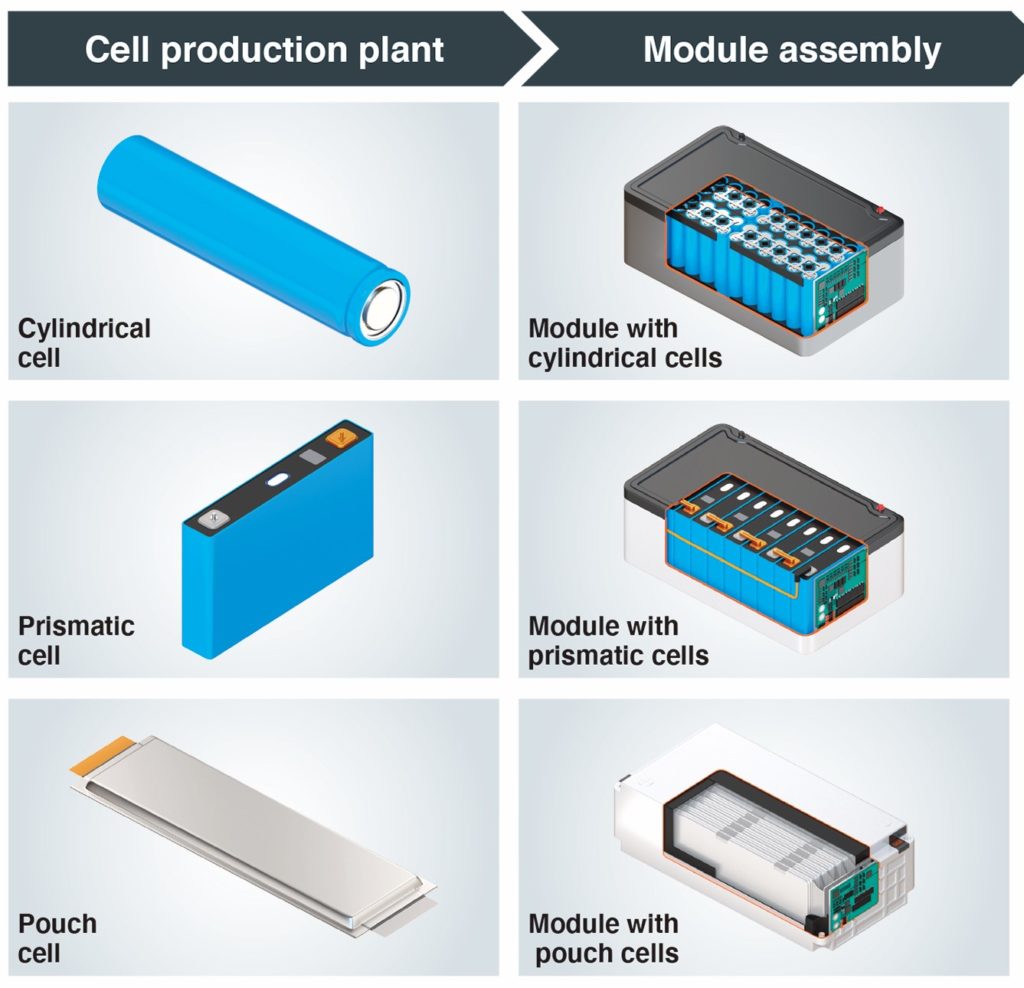
Currently, different types of lithium battery cells are widely used by manufacturers, these include: prismatic cells, pouch cells and cylindrical cells. For example, low voltage lithium battery manufacturer Pylontech uses cylindrical cells in models US5000, US3000, US2000 and others. Cylindrical cells are the most common in solar lithium batteries.
Each type of cell has its own advantages and disadvantages, and the choice depends on the specific needs of the application.
Contenido
Differences between lithium battery cell types
- Cylindrical cells are characterized by their compact design and their ability to handle internal pressures. This makes them suitable for volume production and less expensive. These cells, due to their high stability and design, make them perfect for applications requiring mass production. For example, cylindrical rechargeable lithium-ion battery cells can generate a power capacity of around 2Ah to 6Ah. This makes them suitable for a variety of devices. Cylindrical cells have a positive and a negative terminal, and are available in different universal sizes.
- Prismatic cells are characterized by their packability due to their stacked “layered” configuration. Although they are more difficult and costly to manufacture, they offer significant advantages, such as a greater ability to tolerate overload and excessive discharge. As well as a higher energy density compared to cylindrical cells. This means greater flexibility for the manufacturer and potentially lighter weight in the complete battery. Prismatic cells are widely used in various applications, such as forklift batteries, due to their high energy density and ability to handle internal pressures.
- Pouch cells offer significant advantages in the design and manufacture of battery packs due to their geometry and medium flexibility. These cells are characterized by their aluminum cladding, which gives them a lighter weight compared to other cell types. Although their price is higher than other formats, they do not have a rigid structure, which requires proper thermal management and a cooling system to avoid problems related to gas generation and temperature rise.
Key factors when choosing a lithium cell
When choosing the most suitable cell type it is important to consider a number of factors. These include:
1. Velocidad de descarga: Indica qué tan rápido una celda puede entregar corriente a un voltaje dado. Una tasa de descarga más alta permite una mejor aceleración y subida de pendientes, especialmente en aplicaciones con motores potentes.
2. Energy density: Refers to the amount of energy a cell can store per unit volume or mass. Cells with higher energy density allow the creation of more compact and lighter battery packs.
3. Cell sorting: Involves categorizing and grouping lithium-ion cells based on their characteristics, such as capacity, internal resistance and voltage. Sorting ensures that battery packs are assembled with cells that have similar performance. This results in better overall performance and longer pack longevity.
4. Life: Cell life is a critical factor to consider when choosing a cell for a specific application. For example, lithium polymer cells have an approximate life of 500-600 recharge cycles.
5. Aplicación específica: Es importante considerar las demandas y requisitos únicos de la aplicación para la cual se utilizará la celda de litio.

When evaluating and selecting types of lithium battery cells, it’s important to consider these factors to ensure optimal performance and long service life in the intended application. The final choice will largely depend on the specific needs of each user. That’s why each manufacturer is investing in different cell types in some cases, even developing several in parallel.
Tips to Prolong the Lifespan of Lithium Battery Cells
To extend the lifespan of lithium battery cells, it is recommended to avoid fully discharging them, always leaving at least 10% of the total charge remaining. Additionally, it is advisable to store them in a cool, dry place with a charge level of 40-50% if they will not be used for an extended period.
Additionally, it is important to avoid exposing batteries to high temperatures during charging. Therefore, it is recommended to find a cool place to charge them and to unplug the charger once the process is complete.
These tips can help maximize the durability of the cells, which in turn helps maintain their performance over time.
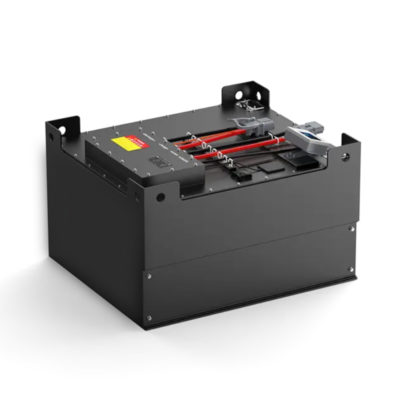
Lithium Traction Battery 80V 560Ah
38.434.44€ IVA incl.

Lithium battery 48V 560Ah for forklift
25.299.89€ IVA incl.

Lithium battery 48V 460Ah for forklift truck
20.630.50€ IVA incl.
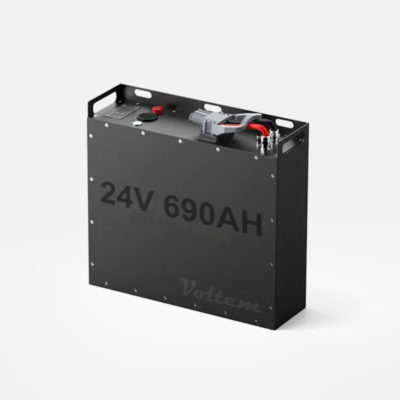
Lithium battery trolley 24V 690Ah
14.609.54€ IVA incl.