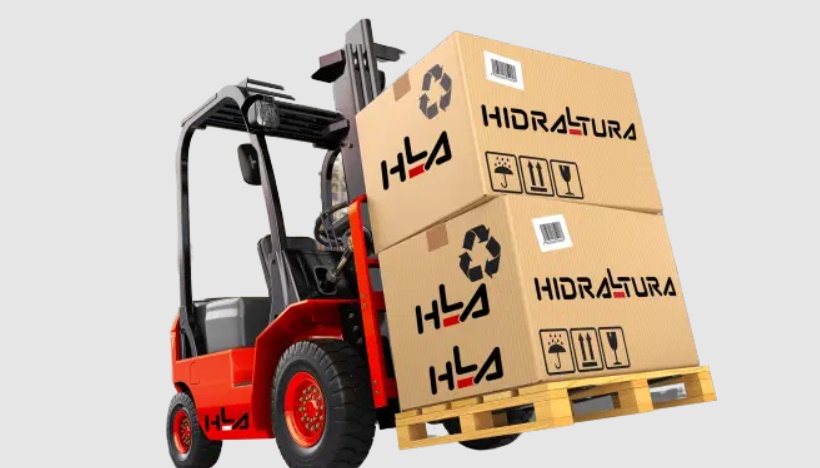
Forklifts, also known as forklifts, are essential equipment in warehouses, distribution centers and construction sites. These machines, designed to lift and transport heavy materials, have revolutionized the industry by facilitating load handling. Also, their versatility and ability to move in tight spaces make them indispensable in logistics environments.
Forklifts play a crucial role in the supply chain, as they are designed to streamline the loading and unloading of goods. Their ability to lift heavy weights to significant heights makes them ideal for stacking products on shelves, optimizing warehouse space. They also contribute to workplace safety by reducing the need to manually lift heavy objects, thus reducing the risk of injury to workers.
Contenido
Different types of forklifts
There are several types of forklifts, each adapted to different needs. The types of forklifts in a warehouse include the following categories:
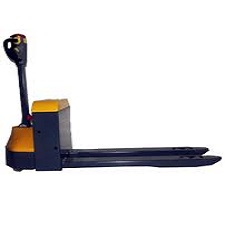
Pallet trucks:
Used to transport loads over short distances. In this category you can find manual pallet trucks, where the operator is the one who performs the force. But they can also be electric, where the use of the operator’s power is reduced thanks to the electric motor. And, in addition to the standard electric version, you can also choose pallet trucks with a platform or with the driver mounted.
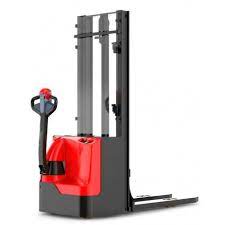
Stackers:
Ideal for loading and unloading palletized loads, and available in variants with the driver behind, to the side or on a platform. These are equipped with a mast that allows the lifting of loads at medium heights, and their compact design makes them ideal for maneuvering in confined spaces. They are powered by a battery that drives the lifting motor, thus facilitating the handling of loads without the need for human effort for hydraulic lifting.
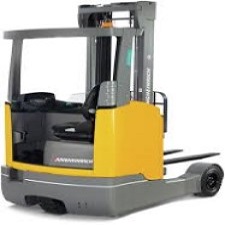
Reach trucks:
They are ideal for the smallest spaces and high lifting heights. This is possible thanks to its fully integrated and proportionate operator compartment, which offers an unbeatable millimetric visibility during maneuvers and operations. It is designed to make the best use of space in warehouses, allowing turns, as well as lateral and front displacements. It also allows the load to be stacked high with smoothness and precision.
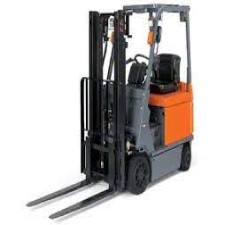
Counterbalanced forklifts:
They are a type of forklift truck that is characterized by incorporating a large counterweight at the rear to balance the load being lifted at the front. This counterweight allows the load to be placed on a fulcrum at the front of the forklift without the risk of tipping over. These trucks are ideal for working both indoors and outdoors, and are especially recommended for handling heavy weights; with capacities ranging from 1 to 60 tons and lifting heights of up to 7 m (23 ft). Therefore, they are ideal for use in warehouses and other loading and unloading areas, as they are fast and can operate in different conditions, both indoors and outdoors.
Order picker:
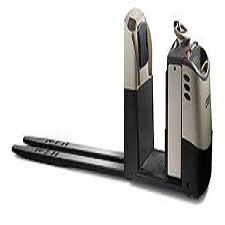
These are machines used in warehouses for picking orders from shelves. They have the capacity to transport an operator since they have a small platform where the person who handles the forklift is located. Order pickers allow the operator to access the vehicle controls and at the same time have direct access to the load. In addition, there are vertical order pickers that offer picking performance up to 14 meters high, so they are often used in production lines, airports, railway stations and ports.
Tow tractors:
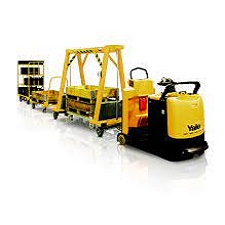
This type of machinery is designed to be hitched to trailers and is capable of carrying large amounts of cargo. This makes them ideal for moving heavy goods over short or long distances. There are different types of tow tractors. In addition, some are designed for narrow aisles, uneven floors or to carry heavy loads. They are also classified into electric and other types of tow tractors, depending on the power source they use to move.
Forklift truck characteristics
Forklift trucks have several important features that make them suitable for various load handling tasks. These include the following:
- Versatility: Forklifts, such as reach trucks and reach trucks, are essential for moving pallets between different spaces, which influences the storage capacity and distribution of products in the warehouse.
- Adaptability to space: Forklifts affect the minimum aisle width and maximum rack height, thus determining the number of racks that can be installed and the storage capacity.
- Energy: The trucks can be electric, diesel or gas powered, allowing them to be adapted to the needs and constraints of the warehouse, such as closed environments or emission requirements.
- Maneuverability: Reach trucks are ideal for working in narrow aisles and have the ability to lift loads to heights of over 14 meters, allowing for greater utilization of storage space.
Table of forklift types and their functions
This table summarizes some examples of the types of forklifts available on the market, each with specific functions and operating systems.
| Types of forklift trucks | Function | Operating system |
|---|---|---|
| Pallet trucks | Daily loading and unloading | Manual, electric |
| Stackers | Internal transport of pallets between operations | Manual, electric |
| Reach trucks | Storage at heights | Electric |
| Counterbalanced forklifts | Handling and transportation of heavy loads | Diesel, gas, electric |
| Order picker | Shelf order picking | Electric |
| Tow tractors | Transportation of large quantities of cargo | Diesel, gas, electric |
Factors to consider when choosing a warehouse forklift truck
When choosing a forklift for a warehouse, several important factors should be considered, including:
- Type of load: It is essential to know the type, weight and size of the load to be handled, because this will determine the most suitable type of forklift.
- Warehouse height and layout: The height of the racks, the layout of the goods and the width of the aisles will influence the choice of forklift truck, so not all are suitable for the same heights or spaces.
- Power source: Consideration should be given to whether electric, gas or diesel trucks are needed, as this will depend on the working environment and emission restrictions.
- Frequency of use: The number of hours of daily use, work shifts and intensity of operation are determining factors in choosing the most suitable type of forklift.
- Working environment: It should be assessed whether the truck will operate indoors, outdoors or in both environments, as well as the availability of ventilation systems and the existence of possible obstacles.
- Warehouse layout: Factors such as ceiling height, aisle width, the presence of gates and doors, and the type of warehouse floor are relevant to the choice of the right forklift truck.
How warehouse size affects forklift truck choice
The size of the warehouse significantly affects the choice of forklift truck because depending on the size of the warehouse there will be different factors to take into account, such as the layout of the space, the height of the racks and the width of the aisles. For example, in warehouses with narrow aisles, reach trucks are ideal, as they can maneuver in tight spaces and lift loads to heights of over 14 meters, allowing for greater utilization of storage space. Also, the choice of forklifts is conditioned by the layout of the warehouse and storage systems and by the width of the aisles, as this influences the versatility and adaptability of the forklifts to the characteristics of the warehouse.
In summary, the size of the warehouse has an impact on the choice of forklift truck, because it has a significant influence on maneuverability, required lift height and adaptability to the available space.
Maintenance and safety
Proper maintenance of forklifts is essential to ensure their safe and efficient operation. Periodic inspections, replacement of worn parts and continuous training for operators are essential to prevent accidents. Likewise, compliance with safety regulations and personnel training are critical aspects in the use of this equipment.
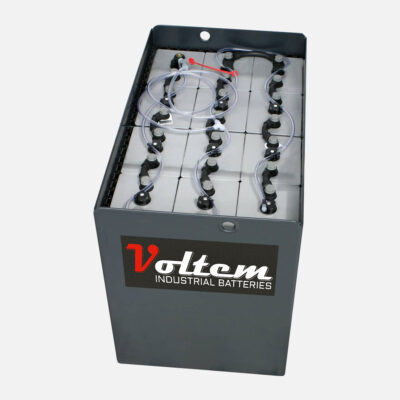
Forklift battery 24V 840ah
2.997.17€ IVA incl.
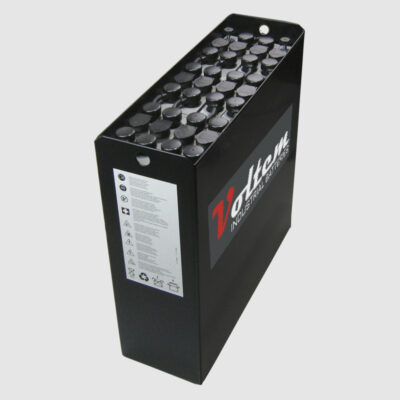
Forklift Truck Battery 24V 240Ah
1.277.76€ IVA incl.

Traction battery 36V 805Ah for forklift trucks
4.178.13€ IVA incl.

Traction battery 80V 500Ah
5.489.77€ IVA incl.

Traction battery 48V 620Ah
3.976.06€ IVA incl.

Traction battery 24V 1000Ah for electric forklift truck
2.900.37€ IVA incl.